In today’s digital world, 3D animation is everywhere. From blockbuster movies to video games and even product design, this technology has transformed the way we tell stories. At the same time, understanding 3D animation history shows us how it evolved from simple wireframes into lifelike digital worlds.
The Evolution of 3D Animation
To understand why 3D animation matters, we should first look at its journey. 3D animation history began with simple wireframe models. Back then, characters looked very basic, almost like outlines. However, as technology improved, these wireframes turned into realistic environments and lifelike characters.
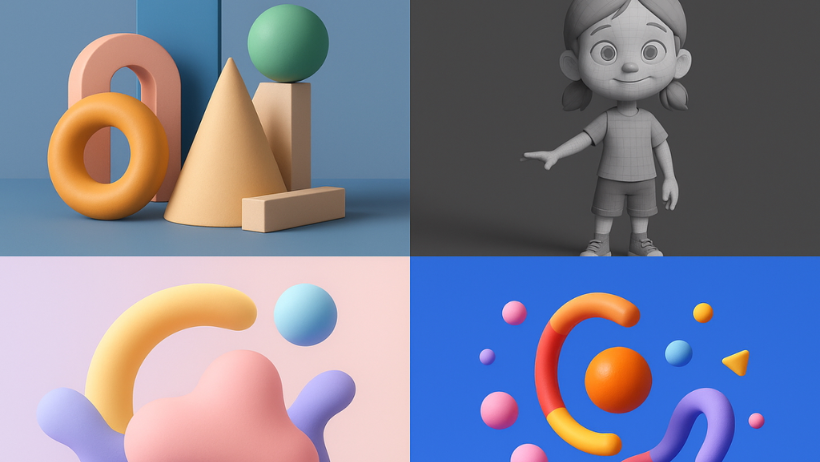
At first, animators could only create limited movements. But later, thanks to advanced tools, they started adding detailed facial expressions, body movements, and even natural effects like smoke, water, and wind. As a result, animation became more believable and engaging.
How 3D Design and Animation Works
To bring characters to life, animators use a combination of modeling, rigging, and motion.
- Modeling: Building digital characters and objects.
- Rigging: Adding a skeleton so the model can move naturally.
- Keyframing: Setting important poses, while the software fills in the gaps.
- Motion Capture: Recording real human movements to apply to 3D characters.
Thanks to these techniques, modern animation can look realistic while still being creative.
Applications of Three-Dimensional Animation
Because 3D animation is so versatile, it has become essential in many industries.
1. Movies and TV
Today’s films rely heavily on 3D animation. Directors can create lifelike doubles of actors, reconstruct historical places, and visualize worlds that do not exist. Moreover, with Autodesk Maya and real-time rendering tools, filmmakers can now see results instantly.
2. Games
The gaming industry is a leader in interactive animation. Game engines such as Unreal Engine allow developers to design characters and environments that respond to players in real time. Therefore, games feel more immersive than ever before.
3. Design and Architecture
Architects use 3D walkthroughs to help clients visualize buildings before they are built. Likewise, product designers use animations to showcase how a device works—something static photos cannot achieve.
4. Education and Healthcare
Students learn complex lessons faster through 3D design and animation. In healthcare, surgeons rehearse operations in digital simulations, while patients understand treatments better through animated guides.
Advances in Technology
Technology is the main driver of change in animation. Powerful GPUs allow faster rendering, while AI tools assist with lip-syncing and texture mapping. Furthermore, cloud rendering solutions like 3S Cloud Render Farm let studios handle large projects without expensive hardware.
Because of these advances, the future of 3D animation looks brighter than ever.
The Future of 3D Animation
Because three-dimensional animation is so flexible, it has found a place across many industries.
In short, the story of 3D animation history shows us that this technology never stops evolving. From simple wireframes to advanced immersive worlds, animation continues to revolutionize how we see and tell stories.
Conclusion
To sum up, 3D animation has grown from simple wireframes into a powerful tool that reshapes industries. By studying 3D animation history, we can see how far it has come and where it is heading. Whether in films, games, or healthcare, animation continues to revolutionize visual storytelling.
At 3S Cloud Render Farm, we provide scalable cloud rendering solutions that empower creators to bring their visions to life—faster and easier.